
Here's a hard truth that most web designers won't tell you. A beautiful website that nobody finds is just an expensive digital business card. And an SEO-optimized site that looks like it was built in 2005? Nobody stays long enough to read it.
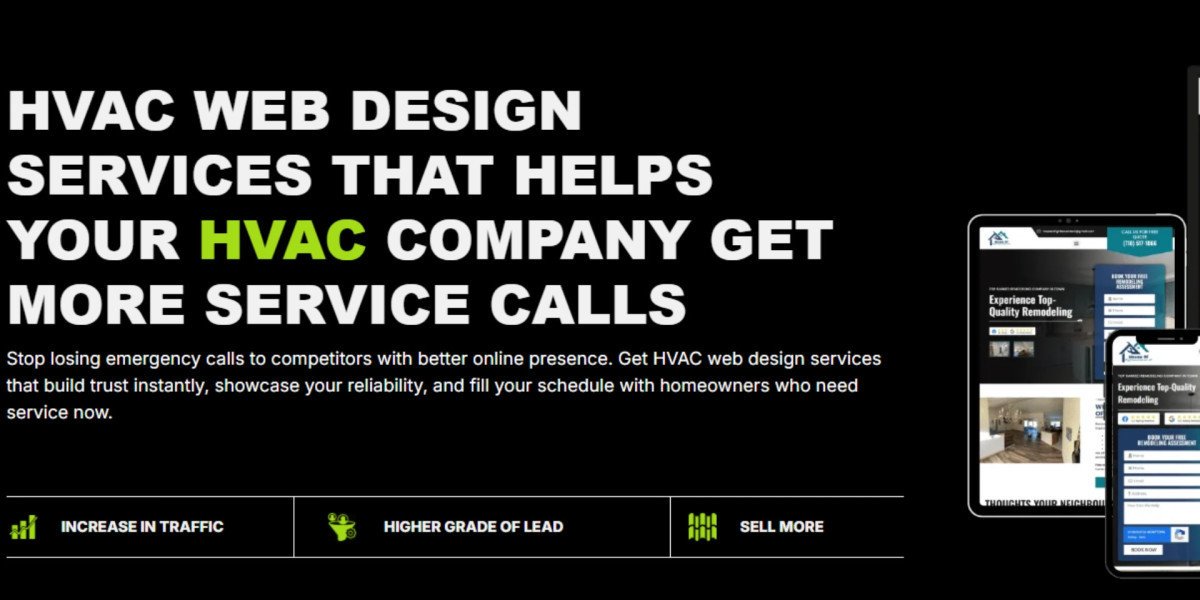
You need both. And that's exactly what separates basic web design from true hvac web design services.
Let me show you how great design and smart SEO work together to bring you more emergency calls — not just more traffic, but the right traffic that actually converts.
The Myth of "Build It and They Will Come"
I hear this all the time. "I just got a new website. Why aren't people calling?"
Because Google doesn't automatically know you exist. Having a website is like opening a store in the middle of the desert. Sure, it looks nice. But nobody can find it.
SEO is your road map. It tells Google what you do, where you serve, and who should see you. Without it, your beautiful site is invisible.
Great design gets people to stay. Great SEO gets people to arrive. You need both.
Why SEO Has to Be Built In, Not Bolted On
Here's where most contractors get burned. They hire a designer to build a beautiful site. Then six months later, they hire an SEO person to "add SEO" to the existing site.
That's backwards. And expensive. And usually ineffective.
SEO isn't a layer you add on top. It has to be built into the foundation of your website. That means:
| SEO Element | Design Impact | Why It Must Be Built-In |
|---|---|---|
| URL structure | Determines page names and hierarchy | Changing URLs after launch breaks links and loses rankings |
| Heading tags (H1, H2, H3) | Affects content layout and visual hierarchy | Adding them later often means redesigning pages |
| Schema markup | Invisible code that helps Google understand your business | Difficult to add cleanly after the fact |
| Internal linking | Affects navigation and user flow | Harder to add strategic links without redoing menus |
| Mobile optimization | Determines entire layout approach | Retrofitting mobile design is a nightmare |
Build SEO in from day one, or pay three times as much to fix it later.
The Technical SEO Checklist for HVAC Websites
Let me give you the technical foundation every HVAC website needs. This isn't optional. It's the price of entry.
Technical SEO must-haves:
SSL certificate (HTTPS, not HTTP) — Google punishes non-secure sites
XML sitemap — tells Google which pages to index
Robots.txt file — tells Google what not to index
Fast hosting (under 2.5 second load time)
Mobile-first responsive design
Clean, crawlable code (no Flash, minimal JavaScript)
Schema markup for LocalBusiness and HVACBusiness
Without these, you're invisible. It doesn't matter how good your content is or how many keywords you use. Google won't even crawl your site properly.
Local SEO: Your Secret Weapon for Emergency Calls
Here's the thing about HVAC searches. They're almost always local. "Furnace repair near me." "AC replacement in [city]." "Emergency HVAC [neighborhood]."
If you're not optimized for local search, you won't appear for these. And that's where most of your emergency calls come from.
Local SEO checklist for HVAC:
Google Business Profile (fully filled out: hours, services, photos, posts)
City-specific service pages ("AC repair in [City A]," "furnace service in [City B]")
Neighborhood landing pages if you serve a large metro area
Consistent NAP (Name, Address, Phone) across every directory
Local backlinks from chambers of commerce, local news, or community orgs
Reviews — lots of them, with local keywords
One contractor added just three city pages to his site. Within 90 days, he ranked on page one for "emergency AC repair" in all three cities. His calls tripled. No ads. Just local SEO built into his design.
Keyword Strategy That Actually Works for HVAC
I see so many HVAC websites targeting the wrong keywords. They go after "HVAC contractor" (too competitive) or "heating and cooling" (too vague).
Smart HVAC keyword strategy:
Primary keywords: "AC repair [city]," "furnace replacement [city]," "emergency HVAC [city]"
Secondary keywords: "24/7 air conditioning repair," "NATE-certified heating service," "same-day furnace fix"
Long-tail keywords: "how much does AC compressor replacement cost in [city]," "why is my heat pump blowing cold air"
Question keywords: "how often should I change my furnace filter," "what size AC unit do I need"
Long-tail keywords convert better because they show high intent. Someone searching "AC repair near me" might be browsing. Someone searching "how much to replace AC capacitor in Dallas" is ready to book.
Learn more: web design for solar companies
Content That Ranks (And Converts)
Here's where design and SEO really merge. The content on your site needs to satisfy both Google's robots and human homeowners.
Content that works for both:
Service pages with 800-1200 words (detailed but readable)
Blog posts answering common questions (500-800 words)
Location pages with local landmarks and neighborhood references
FAQs with schema markup (shows up as rich snippets in search)
Customer case studies with before/after photos and results
One HVAC company started writing blog posts answering specific questions like "Why is my AC freezing up?" Each post targeted a long-tail keyword. Within six months, those posts brought in 40% of their total organic traffic — and 25% of those visitors converted to calls.
Design Elements That Help (Not Hurt) SEO
Some design choices boost SEO. Others destroy it. Let me tell you the difference.
| SEO-Friendly Design | SEO-Killer Design |
|---|---|
| Clean, semantic HTML | Heavy JavaScript frameworks |
| Text in HTML (not images of text) | Text embedded in images |
| Fast, compressed images | Huge, uncompressed images |
| Logical heading structure (H1, then H2, then H3) | Random heading order or no headings |
| Internal links within content | No internal links |
| Simple, crawlable navigation | Mega-menus or dropdown overload |
| Mobile-first responsive | Separate mobile subdomain (m.site.com) |
The biggest SEO killer? Slow load time. Google has explicitly said page speed is a ranking factor. A beautiful site that takes 5 seconds to load will rank below an ugly site that takes 2 seconds.
The On-Page SEO Checklist (Every Page)
Every single page on your HVAC website needs these elements. Not some pages. Every page.
On-page SEO for HVAC service pages:
Unique H1: "AC Repair in [City] | Fast, 24/7 Emergency Service"
Keyword in first 100 words: Use your primary target naturally
Descriptive H2s and H3s: Break content into scannable sections
Internal links: Link to related services and location pages
Image alt text: Describe the image with keywords (naturally)
Meta title: 50-60 characters, includes keyword and city
Meta description: 150-160 characters, includes keyword and a CTA
URL slug: Short, keyword-rich (e.g., /ac-repair-austin)
One contractor applied this checklist to his 12 service pages. Within 45 days, 8 of them ranked on page one. His traffic doubled.
Schema Markup: The Hidden SEO Gold
Let me introduce you to one of the most underrated SEO tools: schema markup. It's code that you add to your website that helps Google understand your content better.
Schema types for HVAC websites:
LocalBusiness schema: Your name, address, phone, hours, service area
HVACBusiness schema: Specific to HVAC contractors (yes, this exists)
Review schema: Shows your star rating in search results
FAQ schema: Makes your Q&A appear as rich snippets
Service schema: Lists your specific services (AC repair, furnace install, etc.)
Why schema matters: Pages with schema markup rank higher and get more clicks because they stand out in search results. A listing with star ratings, hours, and a map gets 30-40% more clicks than a plain listing.
Measuring What Matters: SEO Metrics for HVAC
You don't need to become an analytics expert. But you do need to track the right numbers.
Metrics that matter:
Organic traffic: How many people find you through Google?
Keyword rankings: Are you on page one for your target terms?
Click-through rate (CTR): Of people who see you, how many click?
Bounce rate: Do they stay or leave immediately?
Conversion rate: Of visitors, how many call or fill out forms?
Local pack ranking: Are you in the top 3 Google Maps results?
What good looks like:
Organic traffic: Increasing month over month
Rankings: Top 3 for primary keywords, page one for secondary
CTR: 5-10% for non-branded searches
Bounce rate: Under 60%
Conversion rate: 3-5% for service pages
Track these monthly. If they're moving in the wrong direction, adjust your strategy.
Why Design and SEO Need the Same Team
Here's the biggest mistake contractors make. They hire a designer and an SEO person who never talk to each other.
The designer builds something beautiful but impossible to crawl. The SEO person tries to fix it but can't without breaking the design. They blame each other. Nothing gets better.
You need one team that understands both. Designers who know SEO. SEOs who respect design. Working together from day one.
That's what true ** hvac web design services ** deliver. Not design OR SEO. Design AND SEO. Integrated. Intentional. Invisible to the user but powerful in the results.
The Bottom Line: Traffic Without Conversion Is Just Vanity
I'll leave you with this. SEO brings people to your site. Design keeps them there and convinces them to call. You can't have one without the other.
A well-optimized site that's ugly? People bounce. A beautiful site that nobody finds? People never see it.
But when you combine smart HVAC SEO with emergency-ready design? That's when the phone starts ringing. That's when your website becomes your best closer.
Don't settle for half the equation. Invest in hvac web design services that treat SEO and design as two sides of the same coin. Because at the end of the day, you don't need more traffic. You need more calls.
Let's build you a site that ranks and converts. Your next emergency call is searching right now. Make sure they find you.