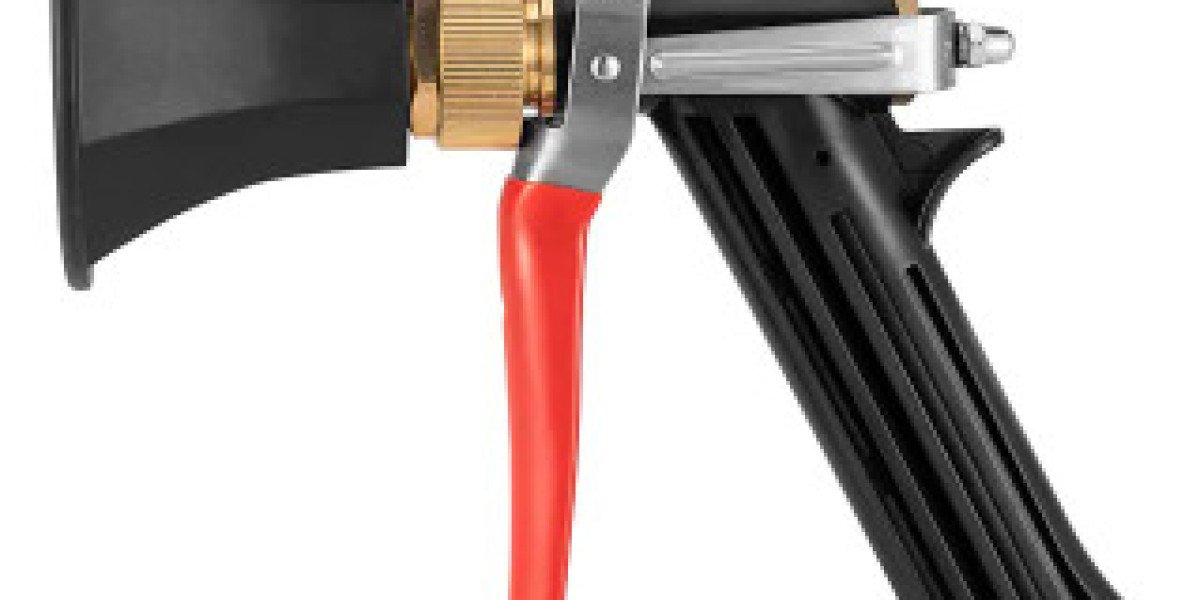

Greenhouse farming requires a different level of precision compared to open-field agriculture because environmental conditions are tightly controlled. An Agricultural Spray Gun combined with an Agricultural High Pressure Spray Nozzle is often used in greenhouse environments to manage irrigation, pest control, and nutrient delivery with greater accuracy. Unlike open fields, greenhouse crops depend heavily on consistent micro-level spraying rather than large-volume irrigation.
One of the main challenges in greenhouse environments is over-saturation. Because airflow is limited, excessive water application can lead to humidity imbalance, which may encourage fungal growth. Adjustable spray systems help reduce this risk by allowing operators to control droplet size and spray intensity based on plant type and growth stage.
Another factor is spacing efficiency. Greenhouse crops are often arranged in tight rows, requiring careful spray direction to avoid overlapping coverage. High-pressure nozzles allow more focused spraying, ensuring that water and nutrients are directed precisely where needed. This reduces waste and helps maintain a stable growing environment.
Nutrient application is another important function. Foliar feeding requires fine droplets that can be absorbed through leaf surfaces. If droplets are too large, they tend to run off instead of being absorbed. Spray guns with adjustable pressure settings help create finer mist patterns suitable for nutrient absorption, improving the efficiency of fertilizer use.
Temperature stability inside greenhouses also affects spraying performance. Higher temperatures can cause rapid evaporation of fine droplets. Controlled high-pressure spraying helps maintain a balance between droplet size and evaporation rate, ensuring that nutrients remain effective long enough to be absorbed by plants.
Water management is another key concern. Greenhouses often operate in regions where water resources are limited or costly. Controlled spraying systems help reduce unnecessary water use by directing flow more precisely. Some farming setups report noticeable reductions in water usage after switching to pressure-based spray systems, although results vary depending on crop type and irrigation schedule.
Equipment hygiene is particularly important in enclosed environments. Residue buildup can affect both spray quality and plant health. Regular cleaning of nozzles ensures that chemical residues do not accumulate and alter future spraying results. Many modern systems are designed for quick disassembly, making cleaning more practical in daily greenhouse operations.
Operator handling also matters. Greenhouse workers often operate in narrow spaces between plant rows. Lightweight and compact spray guns improve maneuverability, allowing operators to reach different sections without damaging plants. This contributes to more consistent coverage across the entire cultivation area.
As greenhouse farming continues to expand globally, precision spraying systems are becoming more widely adopted. Their role is not just about watering plants but about maintaining a controlled environment where every drop of water and nutrient is applied with purpose and efficiency.