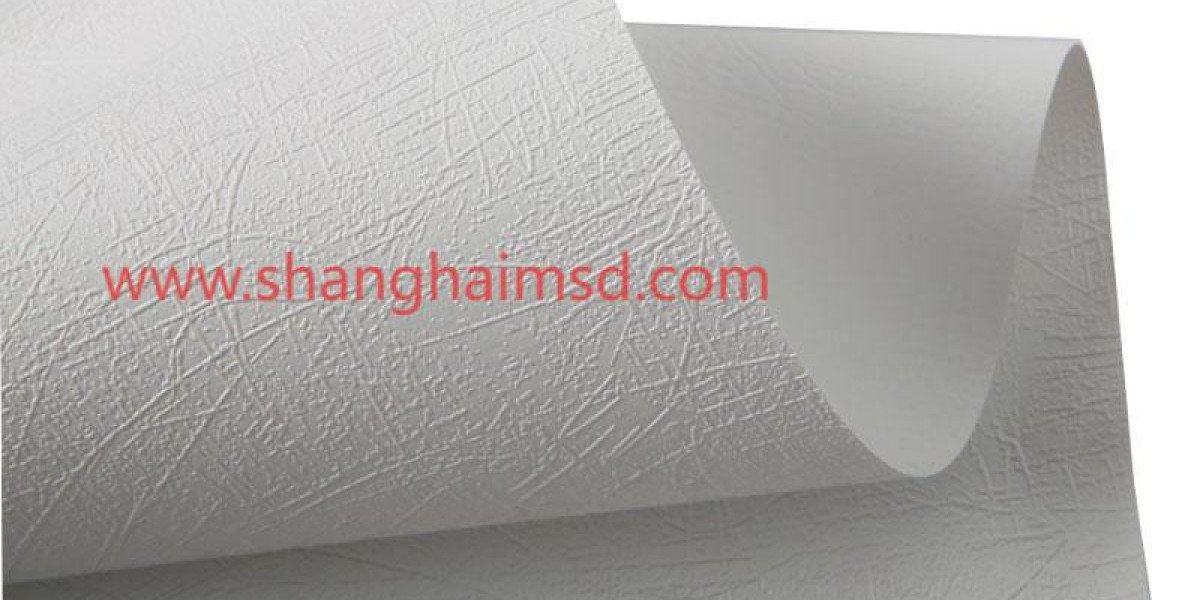

Modern interior finishing materials continue to evolve alongside advances in polymer science, and PVC Ceiling Film has emerged as a highly adaptable solution for decorative and functional ceiling systems in both residential and commercial environments. Positioned between structural substrates and visible interior surfaces, this material offers a balance of aesthetic flexibility, mechanical stability, and processing efficiency. Companies such as Shanghai MSD International Trade Co., Ltd have played a role in supplying consistent-quality ceiling films tailored to diverse architectural and industrial specifications, supporting designers and manufacturers seeking reliable polymer-based surface materials.
At the material level, PVC ceiling films are primarily formulated from polyvinyl chloride resin combined with plasticizers, stabilizers, pigments, and performance-enhancing additives. The plasticizer content determines flexibility and elongation properties, allowing the film to adapt to different installation systems, including stretch ceilings and laminated panels. Stabilizers contribute to thermal stability during processing and long-term use, while UV absorbers and light stabilizers enhance resistance to discoloration and degradation caused by prolonged light exposure. Depending on formulation design, the film can achieve matte, glossy, metallic, or embossed finishes, providing a wide range of decorative possibilities without compromising structural performance.
Mechanical characteristics are essential for ceiling applications because the film must maintain dimensional stability under tension or when laminated to rigid boards. Tensile strength and elongation at break are typically evaluated according to standardized testing protocols to ensure that the film can withstand installation stress and environmental changes. Properly formulated PVC films exhibit balanced flexibility and strength, enabling them to resist cracking while maintaining smooth surface appearance. Tear resistance is also critical, particularly for large-span stretch ceiling systems where localized stress concentration may occur.
Thermal behavior is another key consideration in processing and application. During manufacturing, the film must tolerate calendering or extrusion temperatures without degradation. Controlled heating allows PVC compounds to be plasticized and formed into uniform sheets with precise thickness control. In stretch ceiling systems, the film is often heated on-site to become temporarily pliable, enabling it to be tensioned evenly across a frame structure. Once cooled, it retains its tightened form and smooth visual finish. Heat distortion temperature and softening point measurements help manufacturers determine appropriate installation conditions and safe operating environments.
Surface performance plays a central role in interior environments where aesthetics and maintenance convenience are equally important. PVC ceiling films can be engineered with anti-static treatments to reduce dust accumulation, which is particularly beneficial in offices, healthcare facilities, and clean commercial spaces. Surface hardness and scratch resistance are evaluated through abrasion tests, ensuring the film maintains visual quality during handling and cleaning. For high-humidity environments such as bathrooms or indoor swimming pools, moisture resistance and resistance to microbial growth are also examined through controlled exposure testing.
Processing technology significantly influences the final performance of ceiling films. Calendering remains a widely used production method, allowing precise control over thickness, surface texture, and gloss level. Multi-roll calender systems ensure uniform sheet formation, while inline embossing rollers create decorative patterns directly during production. Alternatively, extrusion lamination processes can bond PVC film to substrates such as gypsum boards, MDF panels, or aluminum composite panels. Adhesion strength between the film and substrate is assessed using peel strength testing to guarantee long-term bonding stability.
Fire safety and environmental compliance are particularly important in architectural materials. PVC ceiling films intended for commercial buildings are often required to meet flame retardancy standards. Flame spread index and smoke density tests are conducted under regulated laboratory conditions to verify compliance with building codes. Formulation adjustments, including flame-retardant additives, help achieve improved fire performance while maintaining flexibility and surface quality. Additionally, modern production increasingly focuses on reducing volatile organic compound emissions and ensuring compliance with indoor air quality standards.
In terms of application fields, PVC ceiling films are widely used in residential apartments, hotels, shopping centers, hospitals, exhibition halls, and transportation hubs. Their lightweight nature simplifies installation and reduces structural load compared to traditional ceiling materials. In retail and hospitality settings, customized printed designs can be integrated into the film surface, enabling branding elements or artistic patterns to be incorporated directly into ceiling architecture. In medical and laboratory environments, easy-clean surfaces and resistance to disinfectants contribute to hygienic interior solutions.
Quality assurance involves a combination of physical, chemical, and environmental testing procedures. Thickness uniformity is monitored through precision measurement systems during production. Color consistency is verified using spectrophotometers to ensure batch-to-batch stability. Accelerated aging tests simulate long-term exposure to light, heat, and humidity, providing predictive data on performance durability. These testing protocols allow manufacturers and suppliers to provide materials suitable for demanding architectural specifications.
Shanghai MSD International Trade Co., Ltd continues to support global customers by offering tailored polymer film solutions aligned with technical and regulatory requirements across multiple regions. With ongoing refinement of formulation design, processing control, and performance verification, ceiling film materials are evolving to meet modern architectural expectations. Further product information and technical consultation details can be found at https://www.shanghaimsd.com .