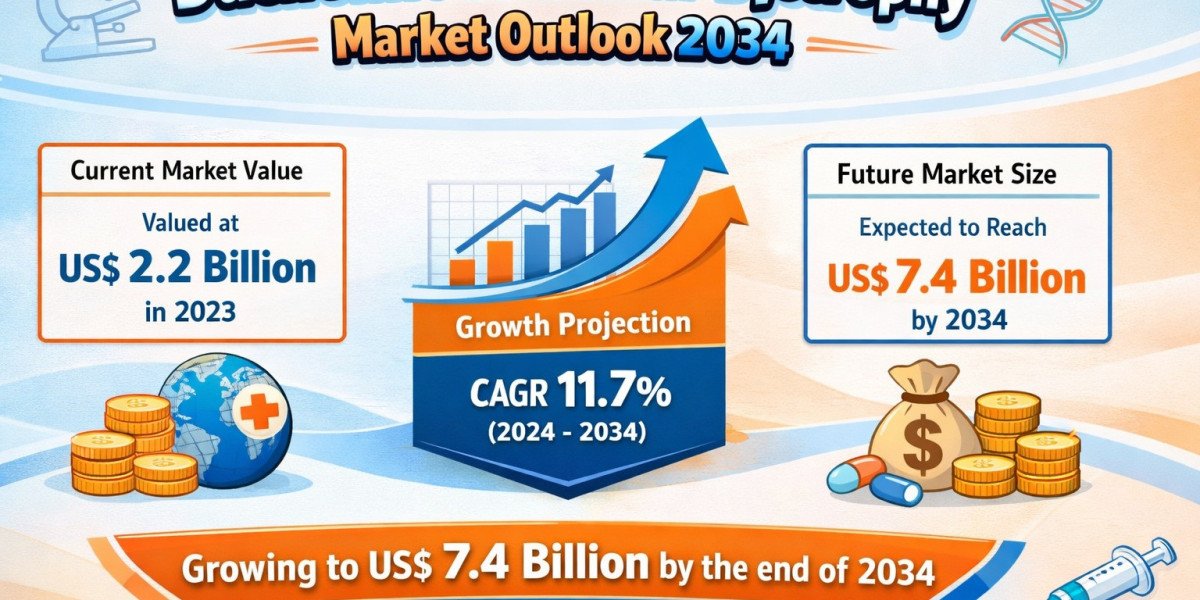

The Duchenne Muscular Dystrophy Market is undergoing a paradigm shift driven by genetic innovation, regulatory acceleration, and increasing global awareness of rare diseases. Valued at US$ 2.2 billion in 2023, the market is forecast to grow at a CAGR of 11.7% from 2024 to 2034, ultimately reaching US$ 7.4 billion by the end of the forecast period. This double-digit growth trajectory reflects not only rising disease prevalence but also the commercialization of transformative molecular-based therapies that are redefining treatment standards.
As healthcare systems transition toward precision medicine, Duchenne muscular dystrophy (DMD) is emerging as one of the most dynamic segments within the rare disease therapeutics landscape.
Disease Overview and Clinical Burden
Duchenne muscular dystrophy is a severe X-linked genetic disorder caused by mutations in the dystrophin gene, resulting in the absence of dystrophin protein. Without this critical protein, muscle fibers deteriorate progressively, leading to muscle weakness, loss of ambulation, respiratory complications, and cardiomyopathy.
According to the National Organization for Rare Disorders, DMD affects approximately one in 3,500 male births worldwide, with around 2,000 new cases diagnosed annually. The Muscular Dystrophy Association estimates a prevalence of six cases per 100,000 individuals in North America and Europe.
Historically, patients rarely survived beyond their teenage years. However, advancements in corticosteroid therapy, ventilatory support, cardiac care, and—most importantly—genetic therapies are significantly extending life expectancy and improving quality of life. As survival improves, long-term disease management needs are expanding, further driving market growth.
Key Market Drivers
Rising Prevalence and Improved Diagnosis
Enhanced genetic screening technologies and growing awareness initiatives are enabling earlier and more accurate diagnoses. Global advocacy efforts led by the World Duchenne Organization have strengthened education campaigns and policy engagement, increasing recognition of DMD across healthcare systems.
Earlier detection increases the number of patients eligible for emerging therapies, particularly those requiring ambulatory status at treatment initiation.
Acceleration of Research and Development
The Duchenne Muscular Dystrophy Market is experiencing a research renaissance. Pharmaceutical and biotechnology companies are investing heavily in:
Exon-skipping technologies
Gene replacement therapy
Stop codon read-through approaches
mRNA-based therapies
Gene editing platforms
A landmark milestone occurred when Sarepta Therapeutics, Inc. secured accelerated approval from the U.S. Food and Drug Administration in 2023 for ELEVIDYS (delandistrogene moxeparvovec-rokl), an adeno-associated virus-based gene therapy targeting ambulatory pediatric patients. This approval validated gene therapy as a commercially viable solution in DMD treatment.
Similarly, Pfizer Inc. advanced its investigational mini-dystrophin gene therapy candidate into Phase III trials, reinforcing competition in the gene therapy segment. Meanwhile, regulatory progress in Canada through Health Canada has supported clinical advancement of exon-skipping candidates.
These developments highlight a strong global regulatory alignment favoring innovation in rare genetic disorders.
Treatment Landscape Analysis
Molecular-Based Therapies: The Fastest Growing Segment
Molecular-based therapies dominate innovation pipelines and represent the highest-growth segment of the Duchenne Muscular Dystrophy Market. These treatments aim to address the genetic root cause of DMD rather than merely managing symptoms.
Exon-skipping drugs such as casimersen, golodiresen, viltolarsen, and eteplirsen have expanded therapeutic options for patients with specific mutations. In parallel, gene replacement therapy seeks to introduce functional dystrophin genes, potentially offering long-term benefits after a single administration.
Emerging mRNA-based approaches are also attracting significant investment, as they may provide scalable and flexible alternatives to viral vector gene delivery systems.
Steroid Therapy: The Established Standard of Care
Corticosteroids remain foundational in DMD treatment, helping delay muscle degeneration and prolong ambulation. Although associated with side effects, they continue to generate steady demand due to affordability and established clinical acceptance.
In March 2024, Santhera Pharmaceuticals launched AGAMREE (vamorolone) in the United States, offering a modified corticosteroid alternative designed to reduce steroid-associated adverse effects.
Supportive and Adjunct Therapies
Nonsteroidal anti-inflammatory drugs (NSAIDs), physical therapy, and surgical interventions remain integral to comprehensive DMD care. As patient lifespans extend, demand for rehabilitation services and cardiac management therapies is increasing, broadening the total addressable market.
End-User Dynamics
Hospitals represent the largest end-user segment due to their capacity to administer complex gene therapies and manage multidisciplinary care. Specialty clinics are gaining traction, particularly in developed markets with advanced rare disease networks. Research institutes also play a critical role in clinical trial execution, biomarker discovery, and translational medicine.
Regional Outlook
North America: Market Leader
North America held the dominant market share in 2023 and is expected to maintain leadership through 2034. Key growth drivers include:
Strong biotechnology ecosystem
Favorable orphan drug policies
High healthcare expenditure
Advanced clinical trial infrastructure
The United States continues to serve as a hub for DMD innovation, supported by regulatory incentives and expedited review pathways.
Asia Pacific: Rapid Expansion
Asia Pacific is projected to record the fastest growth rate during the forecast period. Countries such as Japan, China, India, South Korea, and Australia are increasing investments in rare disease research and regulatory modernization.
Government funding programs, improved reimbursement systems, and collaborations with global biotech firms are strengthening regional competitiveness.
Europe and Emerging Markets
Europe continues to benefit from structured rare disease frameworks and multiple therapy approvals. Meanwhile, Latin America and the Middle East & Africa are gradually improving diagnostic access, though affordability constraints remain significant barriers.
Competitive Landscape and Strategic Positioning
The Duchenne Muscular Dystrophy Market features a blend of multinational pharmaceutical giants and specialized biotech innovators. Companies are pursuing strategies such as:
Rapid regulatory submissions
Strategic partnerships
Licensing agreements
Expansion of mutation-specific pipelines
Major participants include:
F. Hoffmann-La Roche Ltd.
Novartis AG
Teva Pharmaceutical Industries Ltd.
Bristol Myers Squibb Company
GSK plc
Bayer AG
Sun Pharmaceutical Industries Ltd.
Boehringer Ingelheim
Sanofi
Competitive differentiation increasingly depends on genetic targeting precision, durability of response, manufacturing scalability, and payer negotiations.
Emerging Trends
Several transformative trends are shaping the future of the Duchenne Muscular Dystrophy Market:
One-Time Curative Therapy Models: Gene therapies aim to deliver durable benefit from a single administration.
Personalized Medicine: Mutation-specific treatments are expanding therapeutic precision.
Innovative Pricing Models: Outcome-based reimbursement agreements are emerging to address high upfront therapy costs.
Biomarker Development: Improved disease progression metrics are accelerating clinical trials.
Artificial Intelligence Integration: AI is optimizing trial recruitment and endpoint evaluation.
Market Challenges
Despite promising growth, the market faces notable challenges:
High cost of gene therapies
Limited patient population
Long-term safety monitoring requirements
Manufacturing complexity for viral vectors
Unequal global access
Addressing these constraints will require multi-stakeholder collaboration involving regulators, payers, manufacturers, and patient advocacy organizations.
Investment Outlook and Future Opportunities
The Duchenne Muscular Dystrophy Market remains highly attractive to investors due to strong orphan drug incentives and unmet medical need. Venture capital funding and strategic acquisitions are expected to intensify as companies compete for leadership in gene therapy and RNA-based technologies.
As more therapies receive approval, competition may gradually shift from innovation to access optimization, pricing strategies, and geographic expansion. Companies that successfully combine scientific advancement with scalable manufacturing and payer-friendly models are likely to dominate the 2034 landscape.
Conclusion
The Duchenne Muscular Dystrophy Market is evolving from a primarily supportive-care model into a genetically targeted, innovation-driven industry. With accelerated approvals, expanding R&D pipelines, and increasing global awareness, the market is positioned for sustained double-digit growth over the next decade. Strategic collaboration, regulatory alignment, and technological breakthroughs will ultimately determine how effectively the industry meets the profound unmet needs of DMD patients worldwide.